9 April 2018

7 April 2018

CANON EOS80D FOR BIRDING - PART 3

In the last Part 2 i tested the EOS80D body together with a combo of Canon 400mm f5.6 and Kenko Pro 300 DGX 1.4x tele-converter for some birding in Tanjung Tuan Forest Reserve, Port Dickson in the hot sun which did not produce good result. The combo froze either due to the hot temperature or the use of Kenko tele-converter with Canon body.

Last week (30 March to 2 April) i went to a cooler Frasers Hill to do further testing to verify that it was not the weather that caused the freeze. I suspect it was the tele-converter issue that caused the freeze. 

I started the journey at around 10.00a.m driving leisurely to Kuala Kubu Baru and eventually up to Frasers Hill. Along the way i stopped for a short while near a small waterfall and i managed to shoot a female flycatcher just a few meters from where i parked using Canon 400mm f5.6 without the 1.4x tele-converter.


The photo quality was very noisy at ISO2000 which requires some noise reduction in DPP4 and Lightroom. The EOS80D high ISO performance even during a broad daylight is a lot less than i expected. I was hoping with the new sensor it would be a lot better than my EOS60D, but it is not so. The main advantage it has over EOS60D was the 45 points focusing system, but even with that i have problems focusing and lock-on the birds. It is faster than 60D but not as fast as my 5D3. I am stuck between using the nine square and single center point. It just did not nail the focus spot on even though i already customized the focus mode to be more locked on than responsive in the menu. I am missing the center point with 4 assist points like in my 5D3 badly. So, not surprisingly my keeper rate for focus shots is quite low. Worse, a lot of the focus shots were too noisy to use. For the Canon 400mm f5.6 i used -2 AF micro-adjustment which gives the best image quality on static subject 20 - 30 meters away.

I continued my drive all the way to the Gap and passed the Gate up to the hill. Along the way i came across a team of birders along the road searching for Yellow Barbets. I stopped about 100 meters from the gate house at the top to try my luck at a new spot in the photo below.

A new spot about 100meters from the Gate house at the top. Good vintage point over the valley.

This time i wanted to try with the Kenko 1.4x converter on. After about ten minutes of waiting i heard tiny chirpping from the bushes from the slope across the road. They turned up to be a few Silver-eared Mesia looking for insects. I raised my camera to snap a few shots and it froze. Like before i had to take off the lens, pull out the battery, took out the Kenko converter, put back the lens and turned the camera on again for it to work! It was frustrating fiddling with my camera while the birds were all around me, and i missed all the shots including an eagle flying above. So i decided not to use the Kenko 1.4x for the rest of the day as it was not worth it.

My trip this time happened to fall on the International Bird Race which is an annual thing. There were so many birders in groups going around trying to record as many species possible for two days to win the race. However, i did not join the race as i feel that birding should be done in a relax and stress free setting, to appreciate the beauty and behavior of the birds without the time limits and deadlines. Due to the number of crowds and participants i stopped birding and decided to relax in the hotel and take a break. There is always the next day.

DAY 2

After a heavy breakfast at the hotel i went for a drive to the Telekom Loop. Before i started my drive this Yellow-vented Bulbul came to say good morning to me at the carpark area near the hotel.


Along the way again i passed groups of birders doing their thing to finish the second day of the competition. At the first stop near a garage of a private residence No.23 on the Girdle Road where i like to visit, i came across a White-browed shrike babbler, a few Fire-tufted Barbets, a Brown Warbler and a few Spiderhunters. The lighting was really bad with intermittent mist to take any good photos.


A Brown Warbler in the bush. The lighting was bad and EOS80D did not do a good job here.

I continued my drive up to the JPM holiday bungalow and stopped by the roadside overlooking a deep ravine. I saw a few Stripe-throated Bulbuls but i could not get clear shots as the EOS80D had problem locking focus on the head when using single focus point on skittish birds. I only managed to shoot what could be a Purple-rumped Sunbird below.


EOS80D gives better quality in bright sunlight

Continuing the drive along the loop i stopped at the Bank Negara Bungalow where i had a lot of luck with Olive-backed Woodpeckers last time. This time however, they did not show up but there were a lot of Oriental Magpie-Robins singing their favorite tunes.

Oriental Magpie-Robin

My next spot at PKR Bungalow and near Tanglin House only produced Stripe-throated Bulbuls and Long-tailed Sibias. After lunch at the foodcourt i tried my luck at a spot on the way to the new Strawberry Farm. There i spotted a few Chestnut-caped Laughingtrush, Mountain Bulbuls and Lesser Yellow-naped Woodpeckers. For this spot i decided to pair the EOS80D with my Sigma 150-500mm zoom lens on a Manfrotto tripod with a gimbal head to see whether my image quality would improve. The result was not any better as they appear soft and noisy. Below are the only shots i can post with decent quality out of twenty over shots i took.

Mountain Bulbul shot using EOS80D and Sigma 150-500mm lens 


EOS80D produced soft and noisy image for this Lesser Yellow-naped Woodpecker


DAY 3

For my last day of this trip i was hoping my birding would improve, and i would get better shots with my EOS80D. After i checked out of the hotel around 9.30 a.m i tried my luck at the Sri Berkat resthouse along Pedang Road. The first species to appear was a Javan Cuckoo-shrike landed on the overhead electric cable. The image was quite decent shot at 1/1000 sec f8 and ISO6400.

Javan Cuckoo-shrike

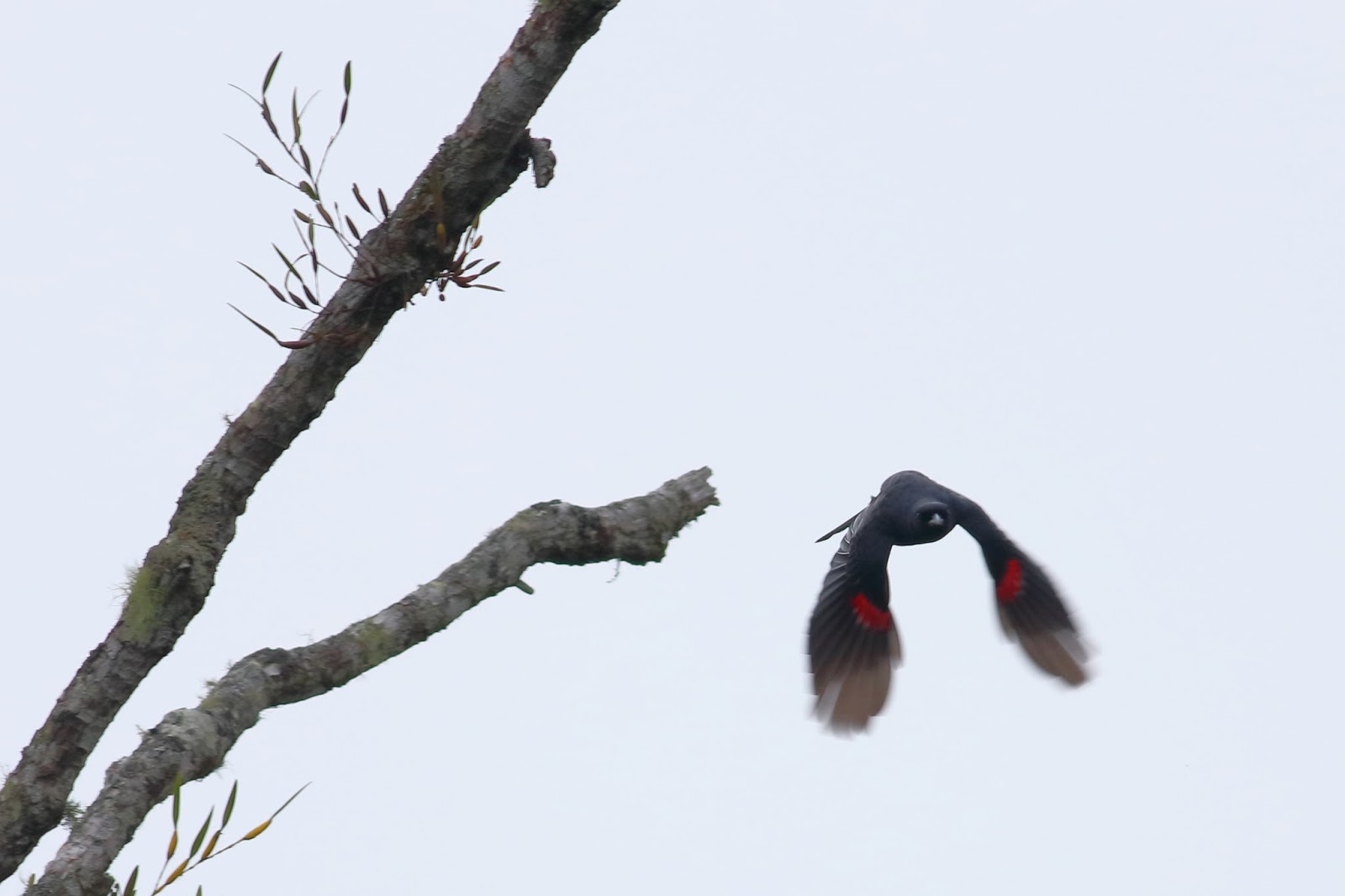
The i spotted a dark silhouette on a tree about 30 meters away. It was hard to see what it was as it was black like a crow but i suspected it was a Crimson-breasted Oriole as it has crimson color on both wings as it flew away. The image is soft and lack of details but the crimson color on the wing is visible. To be fair the weather was gloomy in the morning and the light was not ideal.


A Crimson-breasted Oriole i think


A photo of a Striated Spiderhunter below turned out quite sharp as the distance was very close to where i was standing.


Striated Spiderhunter

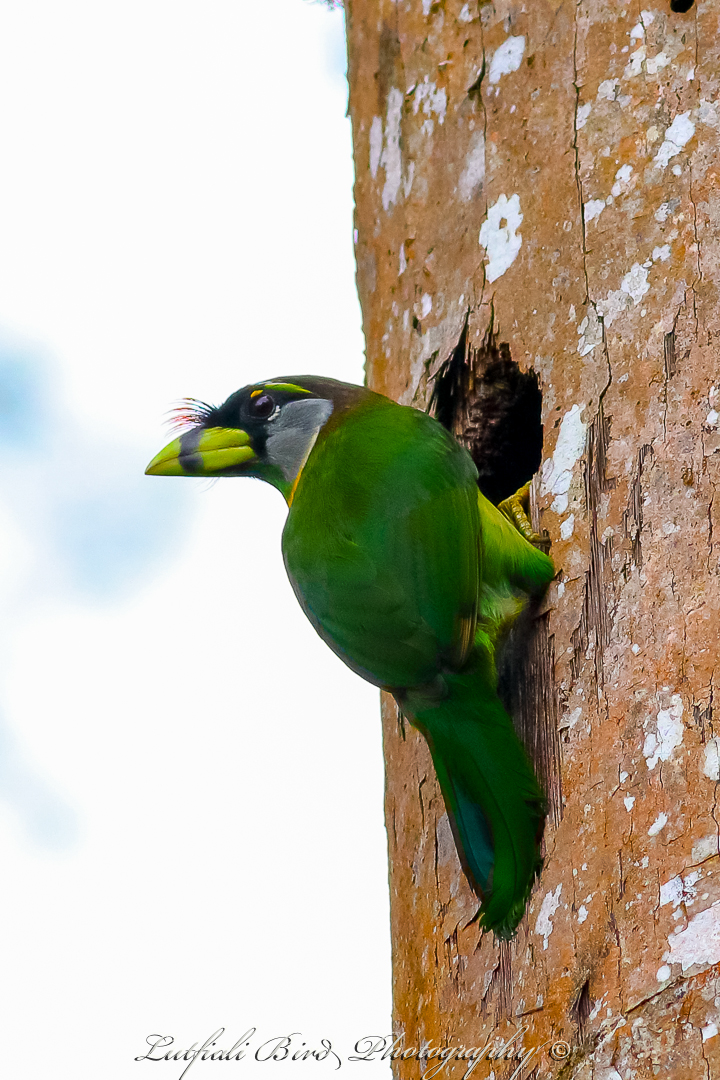
A stop near KEN House just seen Oriental-Magpie Robin and Long-tailed Sibia. However, moving to in front of the Singapore House near their garage compound was more productive. I spotted a few Fire-tufted Barbets on a few trees on opposite sides of Mager Road. Some of the tall trees there have big holes in their trunks which could be their nests. Eventhough there were many Barbets around it was difficult to photograph them in the canopy as the lighting was bad, but i managed to get a few good shots below.

Fire-tufted Barbet at its nest


After the action quite down i went back to the first spot i stopped at when i first arrived on the hill just to try my luck. It was already 12.30 p.m and the sun was high up above and the temperature was getting warmer. The birds would probably be in the shades by now. I saw a White-throated Fantail but too slow to take a shot before it disappeared into the trees. Then i saw a Drongo below which was more cooperative as it perched there on a branch.


A Racket-tailed Drongo


Under certain lighting condition Drongo's color can appear shiny bluish

After lunch i went to a spot along Sri Pahang Road which looked promising but did not find any birds there. The next spot was at the abandoned Jelai Resort where i spotted Black-throated Sunbirds and Orange-bellied Leafbirds. No photos were taken as it was drizzling. 

My last spot before going home to KL was a spot right after the Temerloh bungalow along Ledegham Road. Above the road i could see the Silverpark Apartment blocks. The trees were tall on both sides of the road forming nice canopy, a great spot for birds foraging for food, but at the same time it also mean that the lighting beneath the canopy was not so good making spotting the birds and trying to lock focus difficult. The first group to appear was Sultan Tits. They were all over the place, across the road, above me and at the back. I was really having a hard time trying to lock focus with them moving around but i managed a few shots.


Then came a few Long-tailed Sibia followed by Chestnut-caped Laughingthrush. With all the commotion i did not realize that a bird which i had been trying to photograph for so long had been perching quietly on the electric cable above me - a Red Trogon! Oh my god i could not believe my luck. I stepped back and slowly raised my camera as not to spook it and snap...snap..snap at 7 frame per second as many as i could before it flew across the road into the trees. Yes! Yes! Yes! I finally got a Red Trogon after all these years. Thank you, God. It was the icing for this trip.


A really cute Red Trogon


Just before i wrap up this trip i got a bonus when this bird showed up across the road, a Mountain Green Magpie, what more could i asked for for a finalle.


CONCLUSION


Can the EOS80D body be used for bird photography? My answer is yes, but it is not the best out there like Canon 7D2 or 1DX. The autofocus capability still not as good as my 5D3 and the image quality lots of times were soft and noisy, a lot less than i expected with a new 24.2 megapixel sensor. Will it perform better if paired with better prime lenses like Canon 500mm f4 IS or 600mm f4.0 IS? Maybe, but i cannot confirm that because i do not own those expensive lenses. To some it might be good enough as their main body for birding if they are not fussy about the image quality which are not tack sharp like what you get with 1DX. If shot in bright sunlight or using flash EOS80D will produce a quite good image quality with acceptable noise level. But for me, i think i will go back to my 5D3 as the main body and keep the EOS80D as a back up. I will lose the crop factor but with the keeper rate is so low with the EOS80D there is no point pushing it. I even have a hard time with EOS80D's RAW format which my Lightroom cannot read for post-processing. I either need to upgrade my Lightroom to a new version or convert the RAW images in DPP4 to JPEG first before processing them again in my current Lightroom for the final cut. I think Canon designed the EOS80D to excel in videography first, and still photography second. It was not really meant for sports and wildlife photography like the 7D2, but it can be used for casual sports and wildlife photography. If you want anything more capable  well you need to invest more and buy the 7D2 or 1DX bodies and expensive prime telephoto lenses. 

I think i just wait until what Canon offers in next 7D3 body when it comes out. Till then give EOS80D a try if you are curious and enjoy your birding.

Thanks for reading. Till next time.


25 March 2018

CANON EOS80D FOR BIRDING - PART 2

In the last Part 1 i wrote about the use of the Canon EOS80D body for birding using Canon EF 70-300mm USM IS lens with mixed results depending on the lighting and movement of birds in flight.
In this part i want to show the results when used with a prime lens that i have, and when used with a 1.4X teleconverter. The only long prime lens that i have is the Canon EF400 f5.6 which will give an equivalent focal length of 640mm. I will get a 896mm focal length at f8.0 when combined it with Kenko 1.4X DGX Teleplus Pro 300 teleconverter on Canon EOS 80D.

Here comes the interesting part when using this combination on my EOS 80D. My EOS 80D would freeze completely when i put the lens combo on! It does not freeze my EOS 5D3 but i could not use my autofocus, only manual focus which not so good for moving birds. A search on the net gave me a tip to solve this issue by turning off the AF Micro-adjustment feature on the camera before putting the combo on. Amazingly it did work and the combo registered as 560mm lens f8.0, however, occassionally it did freeze, or after i changed the lens on the body and put it on again.

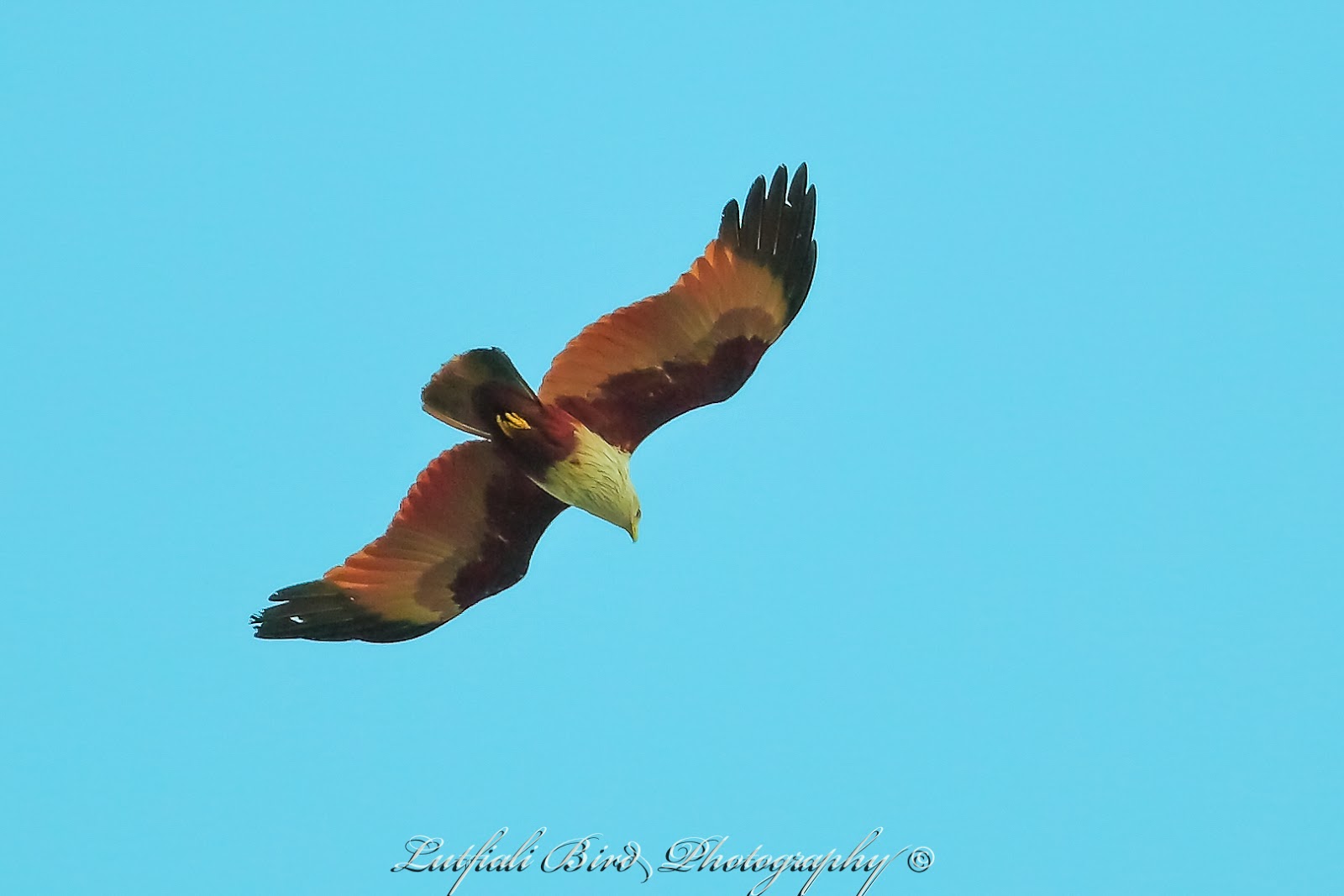
Last week i took two days off from work and went to Port Dickson hoping to photograph whatever migrating raptors left around Tanjung Tuan Lighthouse. I missed the annual Raptor Watch on 10 & 11th March 2018 by a week due to work and family. So, i arrived on the 19th March and checked into the Grand Beach Resort just a couple of kilometers from Tanjung Tuan. The weather was really hot. On the first day i noticed a few Brahminy Kites circling the beach area, not surprising since raptors hunting ground is quite large. Those could be coming from the Tanjung Tuan Forest Reserve where they could be nesting there. Brahminy Kites are quite common in Malaysia. I could not quite get a good shot from my balcony, however i managed to get one the next day using EOS80D and Canon 400mm f5.6 lens.

EOS80D + Canon 400mm f5.6
The EOS80D performed better with a prime lens and on a bright day, but you will not see fine details of the feathers like if you used 1DX and 600mm f4 lens. The photo above was taken around 12.00 noon shot at 1/1000 sec f5.6. It needed a bit of processing in Digital Photo Professional 4 and Lightroom to get the best image possible. The original image was soft and noisy

On the second day (20/3/18)  i went to the Tanjung Tuan Forest Reserve hoping to see more raptors to test the EOS80D + Canon 400mm f5.6 + Kenko 1.4x DGX Teleplus Pro teleconverter combination. I arrived a bit late before 1.00 p.m which was not a good idea as the sun was high and the temperature was hot. Birds are like human they hide in the shade when the temperature gets hot. I was not sure the raptors prefer hot weather or not, but i know they love to glide in the vortex of hot air, it saves them energy while they are hunting.


The walk up the hill took about 30 minutes for me as i was lugging a backpack of equipments - tripod, extra body, 150 - 500mm Sigma lens, gimbal head, flash, extra batteries, mineral water and the  main gear combination. As the day was really hot i had to stop twice along the way. I managed to take a photo of a Racket-tailed Drongo along the way below.

Racket-tailed Drongo
I have to say the EOS80D low light performance is not very good, as the image taken was noisy at ISO12800. I had to use high ISO to get a fast shutter speed of 1/800sec as the combo lens and 1.4x was only f8.0, to match an equivalent focal range of 896mm to prevent blur. I could have used my 600 EX-RT flash but there was no time at all to put it on! The good thing was the combo managed to lock on the bird in the shade of the forest, albeit a bit hunting though.

Here comes the anti-climax though, as i reached the lighthouse the terraces around the lighthouse was closed to public! I was hoping to set up my tripod and camera there to take photos of the raptors flying above the tree canopy and surrounding. Maybe they just open that area to the public during the annual Raptor Watch event. The only places i could sit and wait for the raptors were on the main steps, the grass slope and the path around the lighthouse. 

I missed an opportunity to photograph a Yellow-tailed Robin because the EOS80D focusing was too slow to lock on it before it flew away, damn! I walked along the path surrounding the lighthouse and met a group of elderly birders taking refuge under the trees from the hot sun. We had a chit chat and sharing sightings of birds. They were also saying the raptors probably had flown back to Siberia and not many are left around. That was a bummer to hear after the effort i put in to climb the hill.

I told them i would give a shot anyway and went around the lighthouse path. I could see the rocky shore at least a hundred feet below and the blue sea. I saw a Bulbul eating the fruits of a large tree but i was not interested in Bulbuls on that day. The sun was too hot and there were no trees along the path to give me shade. I finished up whatever left of the water i brought with me while waiting for the raptors to show up. Finally, at the end of the path which connects back to the grassy slope in front of the lighthouse, i saw three raptors flying in cycle high above the tree canopy. I was saying to my self the adage "good things happen to those who wait", ha ha ha.

I raised my camera, lined up the nine focus square and pressed the shutter....pressed the shutter....pressed the shutter....huh?? no sound?? no slapping of the mirror in burst?? Huh?? wtf!! I pressed again and again and again...aaarrrgghhh!!! The camera froze! jammed! hang! whatever you want to call it..because it was too hot under the sun? Really? It never happened to my 5D3 under the hot sun or on top of Mount Titlis in Switzerland in -5 degrees celsius! Are you kidding me Canon?? I was scrambling through the buttons trying to make it come alive but to no avail. Was it the hot sun? Was it the lens combo again? Aaaarrrgghhh!! I ran and sat under a palm tree nearby, took off the lens, took off the battery and let the camera body cool off. By then i could the see the raptors disappeared. I was really disappointed. After a good ten minutes i put back the battery inside the body, turned it on and i could see the LCD came back to life. I put back the lens combo on after disable the AF Micro-adjustment feature and it worked fine, but the birds were already gone!

Has anybody experienced this before, the camera froze because of hot weather? I have not, even with my EOS60D, a predecessor of 80D. Is the EOS80D that sensitive to heat? Was it the hardware inside or the software issue? Was it the combo lens screwing up something inside? I have no answers. But, i do know i need to do some more testing in the field before i could recommend EOS80D to be the main body for serious birding. Maybe it is good enough as a back up body only to my trustful EOS5D3. Maybe i just should have bought the EOS7D2 instead.

For the next Part 3, i will go to a cooler place for a few days to test whether the EOS80D still got what it takes to be a camera for serious birding. I will see how it will perform in cooler misty weather of Frasers Hill. I will post my findings in the next Part 3 here for your reading. Until then, happy birding.

Thanks.


2 February 2018

CANON EOS 80D FOR BIRDING - PART 1

1st February 2018

I have been wanting to buy a second dslr body for quite sometime now to back up my Canon EOS 5D Mark3 which i have used extensively for all my birding photos so far due to its very good AF and picture quality. As always there are always reasons that prevented me from buying one, and i have been patient for quite a few years now. You see, i always wanted a very good APSC body with the 1.6 crop factor to get the most focal range equivalent from my current telephoto lens that i have like the Sigma 150-500mm, Canon EF400mm f5.6 and Canon L 70-300mm IS. That way i do not have to invest in the super expensive Canon 500mm f4 or 600mm f4 lens which have superb quality even after you crop your shots 100%. So, in my mind that dslr body has always been the Canon EOS7D Mark 2 which most wild life photographers use it as their second body. The EOS7D Mark 2 is highly rated by a lot of wildlife shooters for its fast auto-focus which is similar to my EOS 5D Mark 3, and higher rate of continuous shooting at 10 fps compared to 6fps on my EOS 5D Mark 3. Its a natural choice for a second body for my birding photos, however, i hesitated due to its price, ISO performance, no touch screen for video, no wi-fi and what the soon to be launched (summer 2018??) EOS7D Mark 3 body might bring to the game.

So, while waiting for the new EOS7D Mark 3 to come out, i have looked at the EOS80D which is an upgrade on my EOS60D by leaps and bounds. The EOS60D was my first body when i started using dslr bought sometime in 2010. Back then i bought it for general photography, so it was up to the job. However, when i started shooting birds the 9 AF points is very limited and the auto-focus performance could not be compared to my EOS5D Mark3. The ISO performance is also limited at 6400, and the maximum continuous shooting frame rate is only 5fps. However, the good thing about EOS60D is that being an APSC body i get the extra reach due to the 1.6 crop factor.


The EOS80D looks exactly the same as EOS60D, size and weight almost identical except for a few re-positioned buttons, one new button and extra C button for customization. So, the good thing is that i will be very familiar and do not need a steep learning curve to use it. The screen is still the same except it uses a touch screen for selecting modes and focus shift during video shoot, which is fun to use. The resolution is higher from the new sensor at 24.2 megapixel compared to 18 megapixel on the EOS60D and 7D, 20.2 megapixel on EOS7D Mark 2, and 22.0 megapixel on my EOS5D Mark3. The top ISO has been increased to 16000 expandable to 25600. EOS80D gives 7fps compared to 5fps on my EOS60D and 6fps on my EOS5D Mark3 which is better for bird in flight shots. The EOS80D has 45 auto-focus points is compared to 9 on the EOS60D and 65 on EOS5D Mark3, with 27points usable at f8 compares to only 1no on EOS7D Mark 2 and EOS5D Mark 3. The selection of AF in the menu is very good almost similar to EOS7D Mark2 and 5D Mark 3 except it does not have the single point with 9 extension points ,and single point with 4 extension points, which i used extensively on my EOS5D Mark 3 to lock focus on the bird. So being impressed with the specs on paper coupled with good reviews online, i bought one on 26/1/18 to become my second body for birding. I am curious to see whether it can do as good a job as the higher rated EOS7D Mark 2 can. If it is not up to my expectations i will have no choice but to buy the EOS7D Mark 3 body, when it comes out that is which could be in Summer 2018 or 2019??

So, how did it perform so far?

Well, last Sunday(28/1/18) i went to Sekincan and Tanjung Karang, Selangor to see whether my new EOS80D paired with Canon EF70-300mm L lens is up to the job of shooting birds stationed or while in flight.I started the journey after 3.00p.m from Kuala Lumpur and arrived in Sekinchan around 5.30p.m. The reason i chose Sekinchan was because the lady who sold me the camera gave me a tip where to find owls in Sekinchan. Apparently she had done some birding herself and told me owls like to look for food around the paddy fields. However, i could not find any paddy fields, most of the land around the town has palm oil estates. So, i stopped by a river below to see if there were birds for me to shoot.


I was lucky as i was taking a photograph of a small boat on a riverbank a Heron flew and landed on the boat. What a luck!


This Heron is the first bird shot using my new EOS80D.

I used the single focus point to shoot this bird as i found it was a lot easier to lock on the head compared to the other AF modes. However, i have to say the quality of the image is not as good as my EOS5D Mark 3 due to its crop sensor, even though the resolution is higher at 24.2 MP compared to a full frame sensor of 22.0MP on the EOS5D Mark 3. The lock-on is faster on my EOS5D Mark 3. However, the photo quality is quite good after a bit of processing in Lightroom since i shoot in RAW.

Afterwards i drove to Tanjung Karang to find some seashore birds like Terns. I arrived there after 6.00p.m with daylight getting dimmer. Since i never came here before it took a little bit of searching to find the right spot. It was low tide and i noticed the remains of two ships stuck in the muddy shore. I noticed a few egrets perching on timber frames and scouring for food in the mud. So i took as many shots as i could since i am not sure how many will be keepers.

Egrets among the remains of fishing boats on the muddy shore


Terns and Egrets sharing perching points on a shipwreck


The EOS80D is quite good for perching birds


With 7 fps the EOS80D can be quite good for birds in flight shots. Make sure to use 1/2000sec and 45points AF


EOS80D image is quite noisy in dim light. Post processing will improve it.


I tried to get a longer focal range by adding Kenko DGX Pro300 1.4x tele-convertor but the auto-focus became slow and hunting, i missed a lot of shots of the flying egrets. So, i decided to take it off and just use my Canon L EF 70-300mm lens only. The long end gave me 300mm x 1.6 crop factor = 480mm equivalent which is not bad for short to medium range distance but wanting for longer range.


A decent image but not much feather details here


A Brahminy Kite looking for fish


A long shot of Egrets on a beacon marker in the middle of the sea


Terns feeding frenzy over the water near the river mouth


There were a lot of small baitfish in the water which attracted the Terns


Wherever the baitfish swam they followed


A solitary Egret on a marker


Sunset. The EOS80D could be a good camera for landscape with the right wide-angle lens


So, that is all i got to show for my first birding session using my new EOS80D APSC body. I only had about two hours to test it on that day. I am still trying to get used to its features, focusing mode etc. I wish it had the single point with 9 or 4 extension points like in EOS7D Mark 2 or 5D Mark 3 which helps lock on the bird faster. The images are a bit soft and noisy when the light is not so good but i feel i should have adjusted the AF micro-adjustment first for the Canon EF70-300mm L lens before leaving for Sekinchan which will give me sharper photos. However, after all being said, i feel this camera has a potential to be a good second body even though it is not as fast as Canon EOS7D Mark 2. It is lighter and less expensive and maybe if paired with a good prime lens like my Canon EF400mm f5.6 L lens it will produce better quality photos.

I will do further testing in the next trip using my EF400mm f5.6 L lens and Sigma 150-500mm which will give me an equivalent 640mm and 800mm focal range respectively. I will post the photos here so those who are thinking about getting a good body for birding but do not want to spend a fortune can make an informed decision. You never know, EOS80D could just be the solution that you need. Until then, thanks for reading this post and happy birding.

Take care.